
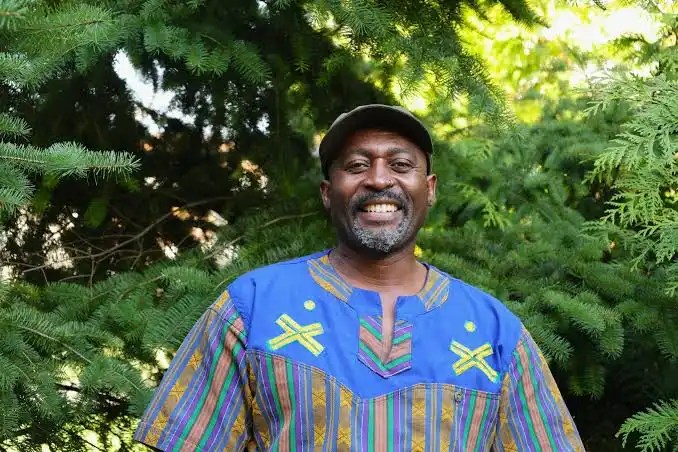
Devi Dee Mucina
I feel a heavy sense of grief sitting in my puku after reading this piece – it’s that feeling you get when you are anxious or worried about something. It is as though I can feel the pain that lives inside the author, and all of those that came before him. Whilst there is beauty in his story, there is simultaneously a lot of pain; pain that flows through generations of Black Africans. And maybe even further to this, it is the pain that sits within the hearts, minds and souls of Indigenous peoples around the globe – we know this pain very well.
I feel the pain of the language barrier he speaks of, he questions whether or not he is losing aspects of his story by writing and communicating in English, not his mother tongue. I relate to this deeply; I have had the honour of seeing Aotearoa through new eyes by learning te reo Māori. I did not know it was possible, but I see things I did not know were there to be seen, so I can not help but empathise with Mucina’s worries because I fear he is right. It is likely parts of his story are lost in translation because there is something about the full depth and breadth of speaking in our native tongue that allows us to fully articulate things unique to who we are as peoples, as Indigenous peoples. In saying that, I do not speak my own reo Māori (Kūki ‘Āirani nei), and feel the pain and the yearning to see our world, our ‘enua, through the eyes of my tīpuna. Maybe I need to come back to this reading at another point. Maybe it’s not supposed to be sad and heavy. But that’s all I feel as a result of reading this – this deep, puku sadness; the kind that makes you just slump over in your chair for a while until you regain the desire to move again.
Edit: I re-read this today, two months after I initially wrote this reflection and I feel the pain within the words. As I reread the article now I see Wilson’s idea of relational ontology intricately woven into his methodology, prioritising the maintenance of healthy relationships between all things and the accountability required to do so. I see the idea of reflexivity coming through, as Whaea Linda also talks about, reminding us of the importance of thinking critically and honestly about how we are interacting with others and our research. I see indigenous research concepts sewn into his work – and yet at the time of my first reading, all I could feel was pain. That, in and of itself, to me is an interesting reflection.


Leave a Reply