
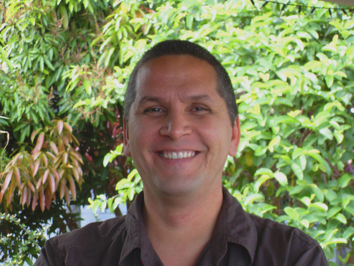
Shawn Wilson
“All of us were research participants, rather than me being the researcher and them my subjects” (p. 69). Upon reading this sentence I realised why I connect so deeply to Shawn Wilson’s work; this is who I am at my core. For as long as I can remember, this is how I have worked in all spaces. I remember working in mental health and being taught what I perceived as very clinical ways of ‘attempting’ to relate to women, particularly Māori and Pasifika wāhine. I never followed the rules, and always followed my wairua which led me to prioritising the relationship in front of me. To this day I still work like this, prioritising creating a safe environment for people to be themselves, be brave and ask questions. Wilson is challenging Western frameworks of validity, in that a researcher must be positioned outside, away from and certainly emotionally removed from both the participants and potentially the kaupapa itself. He challenges this by saying that we are inevitably and unequivocally involved at a personal level in our research, and even more so should be involved in relationships with our participants (or “co-researchers” as he calls them) as a way of working together to discuss the topic. Personally, I love this way of working and feel quite seen in the fact that despite being someone who has been raised separate from her Indigenous identity, it feels like this is a reminder that my tīpuna are still living in and through me – and what an honour that is.
For as long as I can remember, I have lived “relationally,” and part of me feels like this is my tūpuna inside of me, guiding me and leading me ā-wairua, before I even knew they were there. Wilson helps me start to formulate ideas on the ‘how’ aspect of applying Whaea Linda Tuhiwai Smith’s work. I feel like she has taught me a lot in terms of being aware of the colonial constructions we might sit within, but the value of Wilson’s work is that it gives me growing confidence in fulfilling some of the aspirations of decolonising Western methodologies and frameworks. He does this by giving me practical steps, such as his aforementioned framing of “participants” as “co-researchers.” This immediately centralises the idea of relational reciprocity and balances the power dynamics seen in Western academia. Instead of situating himself above his participants, he acknowledges the shared process of knowledge exploration, recognizing the value of everybody’s thoughts and feelings – this is decolonizing methodologies in practice.


Leave a Reply