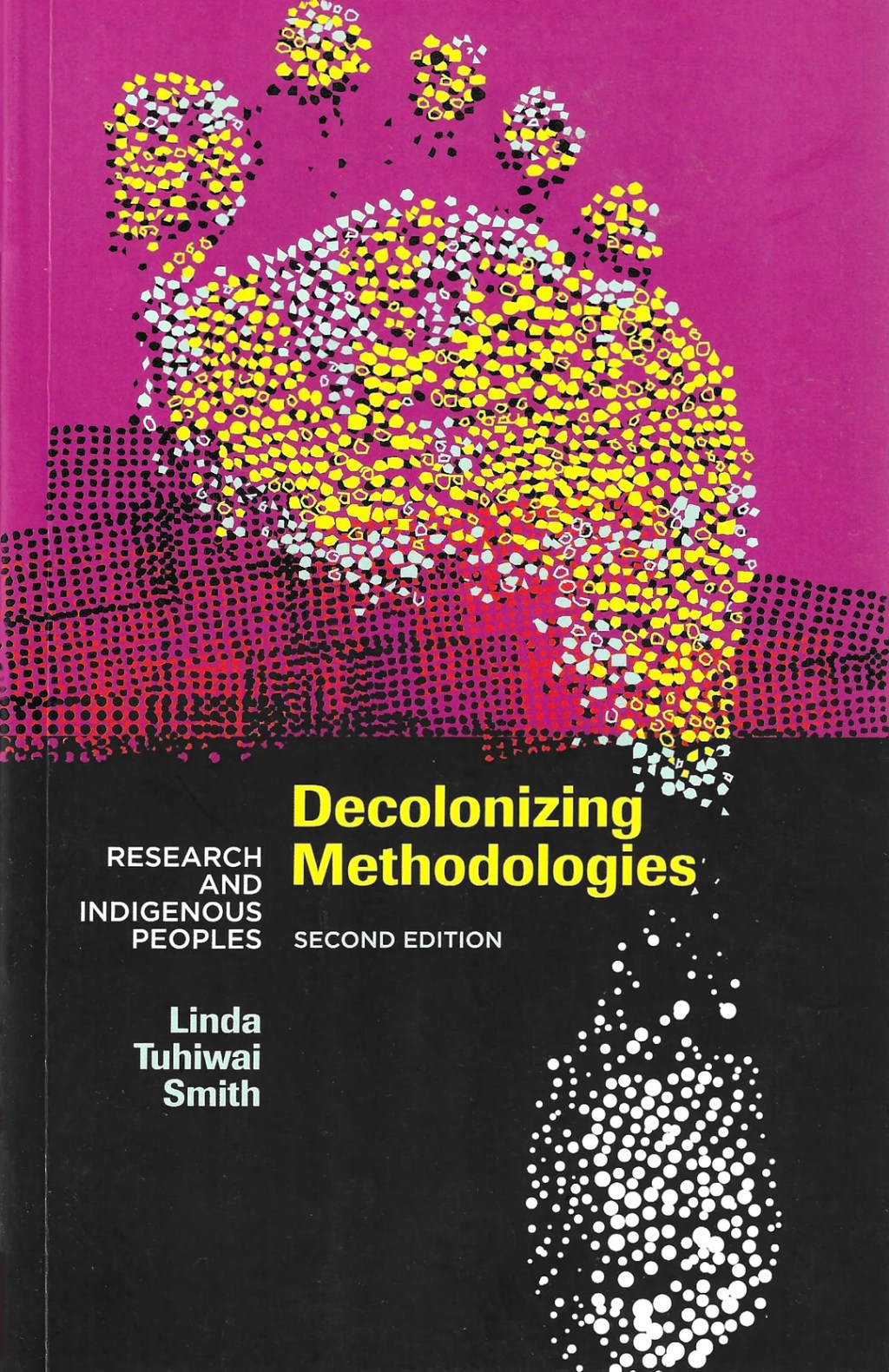
Linda Tuhiwai-Smith
Smith’s point about “living in relation” really spoke to me in connection to some of the thoughts I have been having about my Master’s thesis and where I want to take it. I have been thinking about what “identity” means, and how much my upbringing in a Western, colonial context has contributed to my individualistic perspective on the process of identity reclamation. I am so interested in learning about my whakapapa, my island, and where I am from. It poses questions about my identity, who am I, do I belong, what is my positionality in this research? But as I have sat with this and continued to read, it has sparked the question in me of – how am I actually viewing what identity is and means? And, how are colonial individual constructions of identity forming my perspective on my personal journey of identity and Indigenous reclamation?
I feel encouraged to challenge my perspective of what identity means and looks like so that I am not reproducing the colonial impact on my people in the process of my personal reclamation journey. I want to learn what it looks like to reframe identity as relationship, not this individualistic goal of chasing my own self-interests, but more pursuing and understanding something I am in relationship with and to. In addition, her comments about “positioning” contribute to my thoughts on identity and raise questions about what I actually want from my research. If I am to be quite brutally honest, I feel like my intentions are off the bat, quite selfish in that I am yearning for a sense of belonging to a whenua I want to be able to claim as mine. Smith’s questions, such as ‘What are your intentions? What capacity are you building in the community?’ make me reflect on how I can work on being in a reciprocal and generous relationship with my whenua and whakapapa, not one of taking for my own individual benefits. Whilst Whaea Linda’s work is challenging, it is ultimately grounding and continues to support me as I work out who I am, as a Mangaian, as a a wāhine, as a researcher, and in all aspects of my life.
 Te Wahine Atamai
Leave a comment