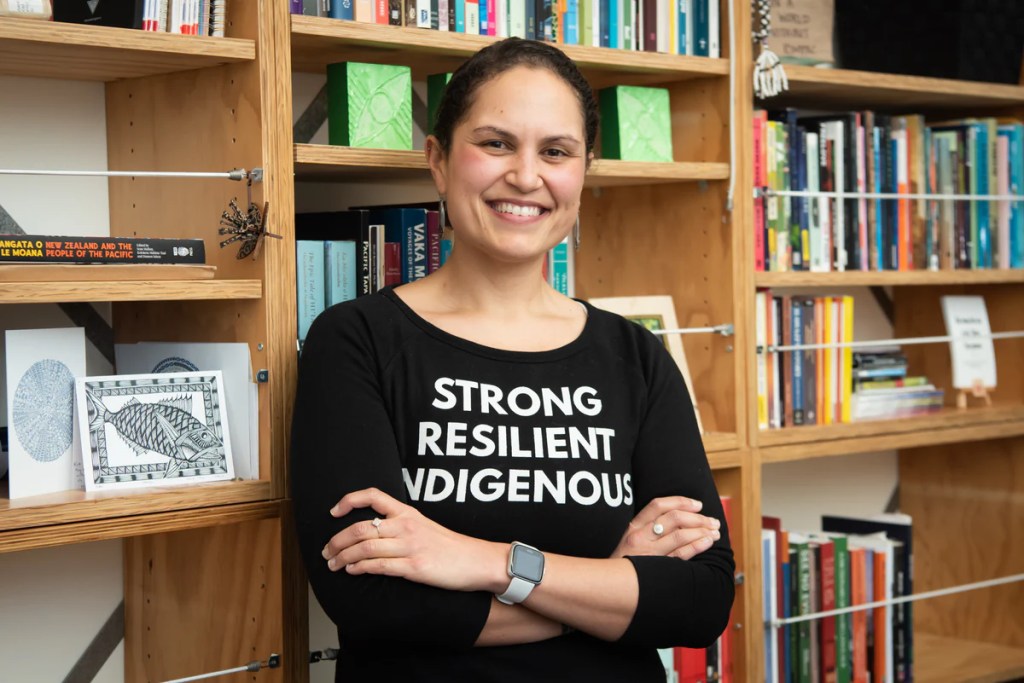
Emalani Case
Taking inspiration from Case’s reflection, I thought I would start this weeks journal by writing down the things that I know about myself, just as she has done;
- I believe I have the ability to bridge the gap between two different worlds – I am a connector.
- I believe that I am both a learner and a teacher.
- I believe that part of my role in life is to practice and exemplify vulnerability as a way to encourage others on their own personal journeys.
- I believe I have untapped, creative potential sitting inside of me, waiting to be released and that I am only now just truly discovering who I am.
I love that Case does this, not in a way that is arrogant but it carries within it this deep sense of knowing who she is – and that is a beautiful thing. This is not just a nice addition to her writing; it is a grounded practice that underpins how she goes about the remainder of the piece. As I have, Case wrote down four things she knew to be true about her purpose here on earth, and she drew on these when she had an experience that did not sit quite right with her; “it is a responsibility to do what I believe I can do to take the conversation forward.” This right here is the beauty of Indigenous research: we are grounded and guided in what we know to be true and right within us and are able to allow those things to flow through our work.
I personally love the way the author challenges a single narrative, and urges us to complicate the story. I think it is a very human characteristic to want to refine and control a certain narrative, whether or not that be trying to “un-do” Western discourse of Indigenous Peoples as savages, or strengthening the idea that we were. However, Case inspires me to step outside of just one idea of who our ancestors were because by doing that, we not only disrespect their mana, but we hinder our capacity to fully step into who we are created to be, as the generations that have come from those ancestors.
Case encourages us to carry the hope and the dreams with the reality and brutality of Indigenous experience. “The quest for self-actualization and a true sense of indigenous warriorhood are things that I will add to the story, the story I will tell as we continue to heal as a people.”
What will you add to the story? How will you dig deep within yourself to know who you are, so that your people experience the healing that you innately have to offer them? All great questions which we should seek to answer.


Leave a Reply